RoofingCost guide
Repair or Replace Your Roof? How to Decide and What Drives the Cost
A leak does not always mean a new roof, and a dry roof can still be near the end of its life. How to read the warning signs, when a repair is enough and what actually moves the price of a replacement.
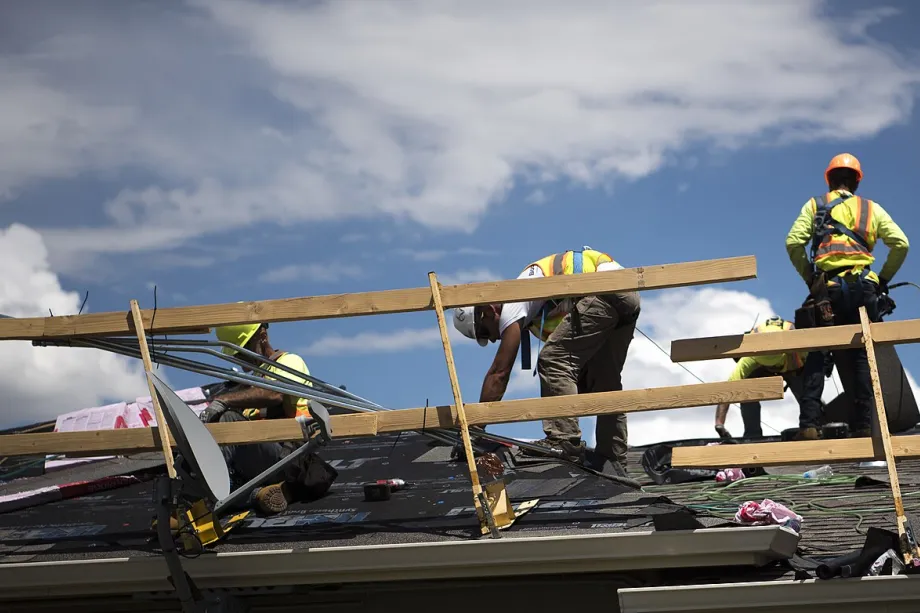
A leak does not always mean you need a new roof, and a roof that has never leaked can still be close to the end of its life. The decision usually comes down to three things: how old the roof is, how widespread the damage is and what a full replacement would cost compared with patching it for a few more years.
Start with the age of the roof
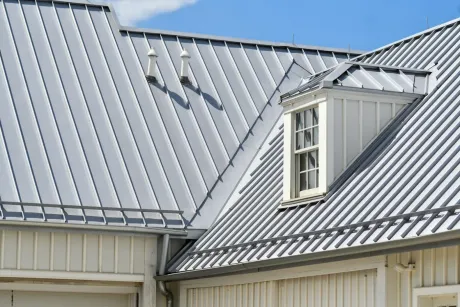
Every roofing material has a typical service life, and knowing where your roof sits on that curve tells you more than any single missing shingle. Three-tab asphalt shingles usually last 15 to 20 years. Architectural (dimensional) asphalt shingles, the most common choice on American homes today, last roughly 20 to 30 years. Standing seam metal can last 40 years or more, and natural slate far longer than that.
Climate shortens those numbers. In the Northeast, a roof goes through dozens of freeze-thaw cycles every winter, carries snow for weeks and deals with ice dams along the eaves. A 22-year-old asphalt roof in Massachusetts or Vermont is usually in worse shape than the same roof in Georgia. If you do not know the age, check the permit history with your town or look for a date written on the underside of the roof sheathing in the attic.
Signs that point to replacement
Granules in the gutters
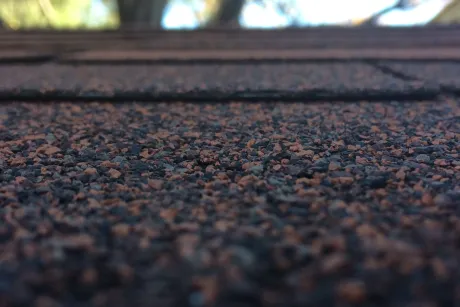
The mineral granules on asphalt shingles protect the asphalt from UV light. When you start finding piles of them at the bottom of downspouts, the shingles are wearing out. Some loss is normal in the first year, but steady granule loss on an older roof means the surface is close to bare.
Curling, cupping and cracked shingles
Shingles that curl at the edges or cup in the middle have lost their flexibility. Cracks across many tabs, not just a few, point to the same problem. These shingles lift in wind and let water get under the next course.
Soft spots and a sagging roof line
If the roof deck feels spongy when a roofer walks on it, or you can see a dip along the ridge or between rafters from the street, water has likely reached the plywood or boards underneath. That damage does not get fixed with new shingles alone.
Leaks in more than one place
One leak at a chimney or vent is a repair. Leaks that show up in different rooms over a couple of seasons usually mean the underlayment and the shingles are failing across the roof.
Ice dams every winter
Ice dams form when heat from the house melts snow on the upper roof and the water refreezes at the colder eaves. They are mainly an attic insulation and ventilation problem, so a new roof by itself will not stop them. They do, however, push water under shingles year after year, and a roof that has lived with them for a long time often has rotted decking near the eaves.
When a repair is the smarter call
A repair makes sense when the damage is limited and the rest of the roof is healthy. Typical examples are a handful of shingles torn off in a storm, failed flashing around a chimney or skylight, a cracked pipe boot or a small area of damaged decking. On a roof that is less than about 15 years old, fixing these is almost always cheaper than replacing.
Many roofers use a rough rule of thumb: if more than about 30 percent of the roof needs work, replacement is usually the better value. Two other details matter. Older shingles are often discontinued, so a patch may not match in color. And many building codes allow only two layers of shingles, so a roof that already has two layers cannot be covered over and has to be torn off.
What drives roof replacement cost
Roofers price work by the square, which is 100 square feet of roof surface. A typical single-family house has somewhere between 15 and 30 squares, and the roof area is always larger than the house footprint because of the pitch and the overhangs.
Size and pitch
More squares means more material and labor, but pitch matters too. A steep roof needs harnesses, roof jacks and more time per square, and many contractors charge a premium above a 7:12 or 8:12 pitch. Dormers, valleys, skylights and chimneys add cutting and flashing work.
Tear-off and disposal
Removing the old roof, hauling it away and paying the landfill fee is part of almost every replacement. Each extra layer of old shingles adds weight and labor to the tear-off.
Decking repairs
Nobody knows the condition of the sheathing until the old shingles are off. Good quotes include a price per sheet of plywood or OSB for any decking that has to be replaced, so the final bill does not surprise you.
Material and region
Architectural asphalt shingles are the most affordable option for most homes. Metal costs noticeably more up front but lasts longer, and slate or synthetic slate sits at the top of the range. Where you live changes the numbers as much as the material does: labor, disposal and permit costs in the Northeast run above the national average, so national per-square-foot figures tend to understate local prices. If you are in New England, it helps to look at a regional breakdown of what a roof replacement costs in Massachusetts before you start collecting quotes, so you know which bids are realistic.
Code items and upgrades
Ice and water shield along the eaves, new drip edge, ridge and soffit ventilation and new flashing are often required by code or by the shingle manufacturer for the warranty to apply. They add to the price, but they are also what keeps a cold-climate roof dry.
How to read a roofing quote
Ask at least three contractors for written quotes, and compare them line by line rather than by the total. A useful quote spells out:
- the number of squares and the shingle brand and product line;
- how many layers will be torn off and how disposal is handled;
- the type of underlayment and how far up from the eaves the ice and water shield goes;
- the price per sheet for any decking replacement;
- ventilation work, drip edge and flashing, including whether old flashing is reused;
- the permit, cleanup and a magnetic sweep for nails;
- both the manufacturer warranty and the contractor's workmanship warranty, in years.
A bid that is much lower than the others usually leaves something out, most often ice and water shield, new flashing or decking. Also check that the contractor is licensed and insured where you live.
Timing the job
Spring and fall are the busiest seasons for roofers in cold climates. Asphalt shingles can be installed in winter, but the adhesive strips need warmth to seal, so crews work around the weather and the schedule slips. If inspection shows the roof is near the end of its life, booking a crew a season ahead usually gets you better dates and sometimes a better price.
The short version
Repair a roof that is relatively young and has damage in one area. Plan for replacement when the roof is near the end of its expected life, the damage is spread across it or the deck underneath has gone soft. Then compare quotes on scope, not just price, and use regional cost figures rather than national averages to judge whether a bid makes sense.