FlooringCost guide
What Does Hardwood Flooring Installation Cost in 2026?
Hardwood flooring installation typically costs $7 to $18 per square foot including materials and labor in 2026. The final figure depends on the wood species, plank width, subfloor condition and the complexity of the room. This guide walks you through every factor that shapes the price, with worked examples so you can estimate your own project.
What is the average cost to install hardwood floors per square foot?
A complete hardwood flooring installation typically costs $7 to $18 per square foot, including both materials and professional labor. That range covers everything from a basic domestic oak strip to a wide-plank exotic wood with a custom finish. The final figure depends more on the wood you choose and the condition of your subfloor than on the size of the room.
Materials alone run $4 to $12 per square foot. At the low end you find common domestic species like red oak or ash in a standard 2¼-inch strip, prefinished at the factory. The high end covers imported woods such as Brazilian walnut or teak, wider and longer planks, and custom on-site staining and sealing. Engineered hardwood with a thick wear layer sits in the middle of that material range and costs about the same as solid wood.
Labor adds another $3 to $8 per square foot. A straightforward glue-down or nail-down installation over a clean, level plywood subfloor stays near $3. The price rises when the crew removes old flooring, patches a damaged subfloor, lays an acoustic underlayment, or works around many doorways and stairs. Intricate patterns like herringbone or a border inlay push labor toward the top of the range because they take more cutting and layout time.
Which wood species cost the most and the least?
Domestic species such as red oak and white oak sit at the lower end of the material range. Maple costs slightly more because its tight grain and pale color demand careful grading, but it is still widely available and predictable to work with. Hickory is the priciest of the common North American hardwoods. Its extreme density wears out blades faster, and the boards show more color variation, which raises the waste factor during installation.
Imported exotic species push the material cost noticeably higher. Brazilian walnut, often sold as ipe, is so dense that it can blunt a saw blade in a single room. Teak is expensive because genuine plantation-grown stock is limited, and most of what reaches the market comes through European distributors. Tigerwood and Brazilian cherry sit in the middle of the exotic tier: they are hard but less punishing on tools than ipe, and they come in wider planks that cover a floor faster.
Engineered boards with a thick sawn wear layer cost about the same as solid wood of the same species, sometimes more when the core is birch plywood rather than poplar. The saving is in the installation, not the board itself. A thin rotary-peel engineered floor is the budget option, but you cannot refinish it, so you trade a lower upfront cost for a shorter service life.
- Red oak and white oak are the most affordable domestic hardwoods, with steady supply and straightforward milling.
- Maple costs more than oak because it requires stricter sorting and shows sanding marks more easily.
- Hickory is the most expensive common domestic species due to its hardness and high waste factor.
- Brazilian walnut and teak are premium exotics that raise both material and labor costs because of their density.
- Tigerwood and Brazilian cherry offer an exotic look at a mid-tier price within the imported category.
- Engineered wood with a thick wear layer costs about the same as solid wood; the thin rotary-peel version is the cheapest option but cannot be refinished.
How does subfloor preparation affect the total cost?
Subfloor preparation is the work you do not see, but it determines whether the floor lasts 5 years or 30. A hardwood floor needs a flat, dry and stable base. If your subfloor is wavy, soft or damp, the boards will creak, cup or buckle within the first heating season. Preparation costs vary widely because you never know the condition of what lies under the old floor until you uncover it.
The most common tasks and how they affect the bill:
- Screeding and leveling. A concrete slab with dips deeper than 1/8 inch over a 3 m span needs a self-leveling compound. This adds $2-5 per square foot depending on the thickness required.
- Plywood underlayment. Over a plank subfloor, a layer of 1/2 inch exterior-grade plywood is screwed down every 6 inches to kill movement and squeaks. Budget $1.50-3 per square foot for materials and labor.
- Moisture barrier. A 6 mil polyethylene sheet over a crawl space or a two-part epoxy sealer on a concrete slab prevents vapour from reaching the wood. A sheet costs $0.30-0.80 per square foot; an epoxy coating runs $2-4 per square foot.
- Old floor removal. Pulling up glued-down parquet, ceramic tile or several layers of vinyl and disposing of them adds $1-3 per square foot, and more if asbestos abatement is required.
A clean, level subfloor might need nothing more than a quick sweep before the installers lay the underlayment. A 1970s concrete slab in a basement can easily require $5-8 per square foot of prep before the first hardwood board goes down. The only way to get a firm number is to pull up a corner of the existing floor during the estimate visit and see what is underneath.
What extras should I budget for beyond the flooring itself?
The cost of the boards is the largest line item, but the work around them adds up. You can expect to pay for transitions, trim, stair work and clearing the room. These extras often add 15-25% to the total project cost.
Transitions are the strips that join hardwood to tile, carpet or a different floor in a doorway. You need one for every threshold. Baseboards and shoe molding cover the expansion gap at the walls. If the old trim is removed and reinstalled, you pay for the labor; if it is too damaged, you pay for new material and painting.
- Transitions between rooms: a metal or wood strip at every doorway where the new floor meets another surface.
- Baseboard removal and reinstallation: taking off the old baseboard, numbering it and putting it back after the floor is laid.
- New baseboards and shoe molding: material and fitting when the existing trim cannot be reused.
- Stair treads and risers: each step is a separate piece of work, often priced per tread, and takes more time than a flat floor.
- Furniture moving: the crew moves sofas, tables and beds out of the work area and back when the finish has cured.
- Disposal of old flooring: tearing out carpet or vinyl and hauling it away, usually charged by the square foot or as a flat fee per load.
Stairs are the single largest extra. A flight of stairs can add the labor equivalent of a small room because every tread and riser must be cut, fitted and fastened individually. Disposal fees depend on what is being removed: carpet and pad are light but bulky, while old tile or glued-down parquet costs more to strip and haul. Ask the contractor to list every extra in the written estimate so you see the full cost before the work begins.
How do I get a reliable estimate for my own home?
A reliable estimate starts with measuring the room yourself. Use a tape measure to find the length and width in feet, then multiply them for the total square footage. For a 200 sq ft living room, you would add 10% for cuts and waste, which brings the order quantity to 220 sq ft. Contractors do the same calculation, but checking it yourself lets you compare quotes on equal terms.
Next, choose a wood grade. Clear grade has no knots and costs the most; select grade has some natural character; common grade, often called rustic, shows more knots and color variation. The grade you pick changes the material cost, so settle on one before you call contractors. Then ask three local flooring companies for itemized quotes that split materials, labor, subfloor work and trim separately. An itemized quote lets you see whether a higher price comes from better wood or extra preparation, not a hidden markup.
- Measure the room and add 10% for cuts and waste.
- Pick a wood grade and note the exact product name.
- Ask three contractors for itemized, written quotes.
- Check that each quote includes subfloor prep and trim work.
- Compare the line items, not just the bottom figure.
Is engineered wood cheaper to install than solid hardwood?
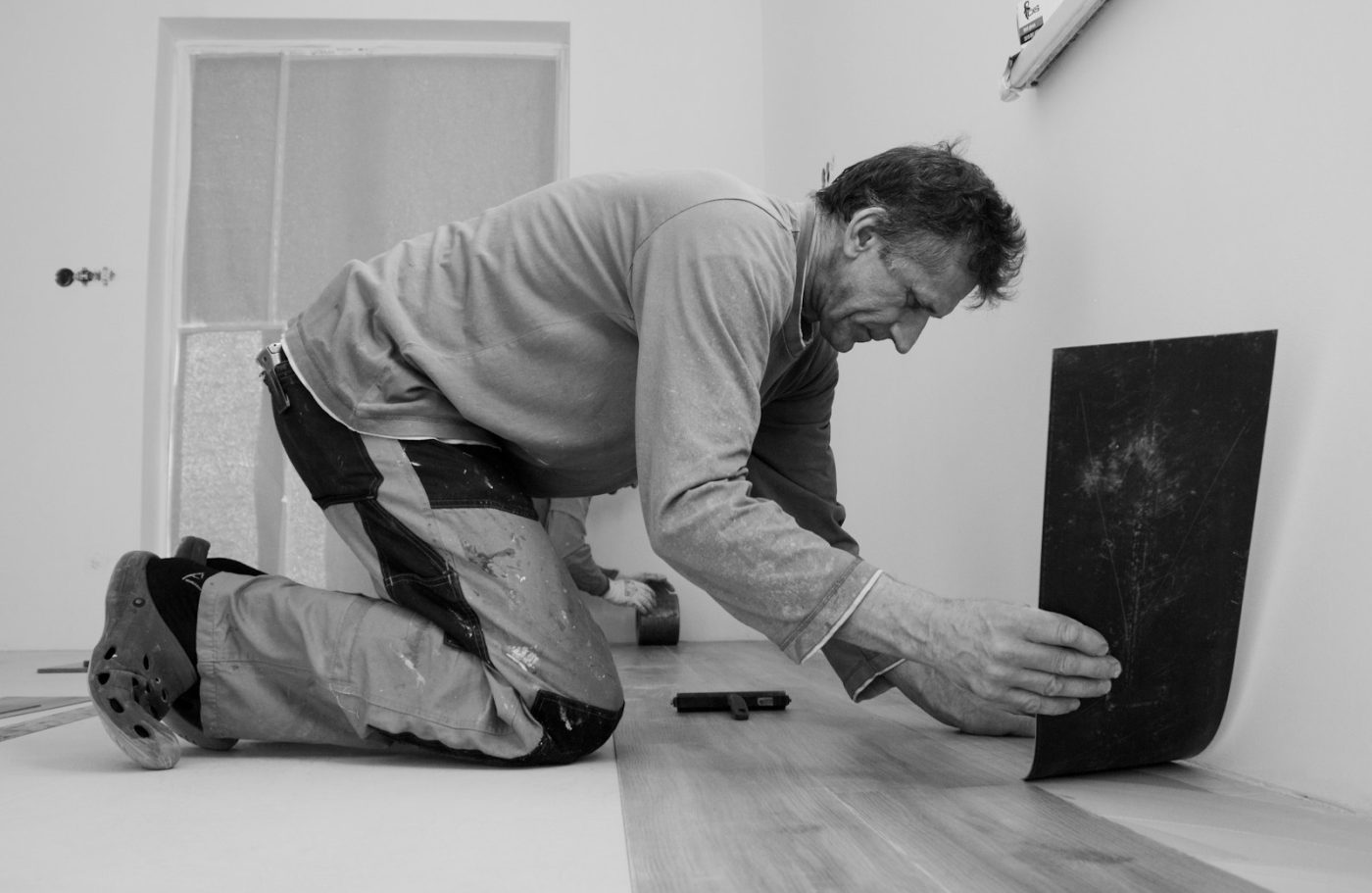
Engineered wood flooring is usually cheaper to install than solid hardwood, mainly because of the faster installation methods it allows. The planks themselves cost about the same per square foot for mid-range oak in both categories, but labor makes the difference. A floating floor with a click-lock system goes down over an underlay in a day or two for a typical room, with no nails and no glue. Solid hardwood requires nail-down installation over a wooden subfloor, which takes longer and demands more skill. You pay for the extra hours and the consumables the crew uses.
When the subfloor is concrete, the cost gap widens further. Solid hardwood cannot be nailed into concrete, so you would first need a plywood subfloor on top, adding material and labor. Engineered planks can be glued directly to the concrete slab or floated over it with a vapour barrier. Glue-down installation costs more than floating but still avoids building a new subfloor. The total project cost for engineered wood on concrete is often 25-40% lower than the solid wood alternative once subfloor work is included, even when the plank price is similar.
Engineered wood makes practical sense in basements, over underfloor heating and in kitchens where humidity swings are common. The cross-layered construction resists expansion and contraction better than solid boards. Solid hardwood remains the better choice for a ground-floor living room with a timber subfloor, especially if you plan to sand and refinish the floor several times over decades. The thicker wear layer of solid boards allows more refinishing cycles than a typical engineered product.
What questions should I ask a flooring contractor before I hire them?
Asking the right questions before you sign a contract will protect you from surprise costs and delays. A competent contractor answers these without hesitation and provides the details in writing.
- Will you test the moisture content of the subfloor and the wood before installation, and what readings do you consider safe?
- How do you calculate the waste factor for this project, and who pays for the extra material if it runs higher?
- What does your timeline look like, and which stages (acclimation, subfloor work, sanding, finishing) take the longest in a home like mine?
- Can I see your certificate of liability insurance and your workers’ compensation policy?
- What is your payment schedule, and is the final instalment due only after the walkthrough and any punch-list fixes?
- What does your written warranty cover, how long does it last, and does it include both materials and labor?
Listen for direct answers rather than general reassurances. If the contractor cannot explain their moisture testing procedure or refuses to put the warranty and payment terms on paper, keep looking.
Frequently asked questions
Does hardwood flooring installation cost more than laminate or vinyl?
Yes. Hardwood installation runs $7-18 per square foot while laminate is $3-8 and luxury vinyl plank is $3-10. The difference comes from the raw material cost and the slower, more specialized labor. Hardwood also lasts decades longer and can be refinished, which changes the long-term value calculation.
Can I save money by installing hardwood floors myself?
You can save the labor portion, roughly $3-8 per square foot, but the work requires a flooring nailer, a miter saw, a moisture meter and experience with subfloor preparation. Mistakes with acclimation or nailing often lead to gaps and cupping that cost more to fix than the original installation. Most homeowners hire a professional for the main floor and handle closets themselves.
How long does a hardwood floor installation take?
A crew of two can install 200-400 square feet of nail-down hardwood in one day once the subfloor is ready. Acclimation adds 3-7 days, and finishing or staining adds another 1-3 days. A typical 500 sq ft project takes 5-10 working days from delivery to the final walk-through.
Should I choose prefinished or site-finished hardwood?
Prefinished boards cost more per square foot but install faster and produce no dust or fumes in your home. Site-finished floors let you match an existing stain exactly and create a seamless surface without bevels between planks. The total installed cost is often similar, so the choice comes down to speed and convenience versus a fully custom look.